




Lior Navok
Lior Navok (b. 1971, Tel Aviv) is an internationally recognized composer, pianist, and conductor whose music is distinguished by emotional immediacy, narrative clarity, and a deep engagement with historical and human themes. Educated at the Jerusalem Academy of Music and Dance and later at the New England Conservatory, Navok studied with prominent composers including John Harbison, and has produced an impressive catalog of more than ninety works spanning opera, orchestral music, chamber music, and vocal compositions. His works have been performed in major venues such as Carnegie Hall and the Berlin Philharmonie, and he has received numerous awards, including the Israel Prime Minister Award and commissions from leading foundations.
Navok has consistently explored subjects rooted in the human experiences of conflict, memory, and moral responsibility. Although his Holocaust-focused compositions are relatively few in number compared with his entire canon, they are a significant part of his artistic voice indicating a deliberate and focused artistic response to historical trauma. These works align with a broader trend among contemporary composers who seek to confront the Holocaust not through abstraction, but through intimate, historically contextualized storytelling. His work releases voices suspended in time in the archive to be heard once more. One such work is Navok’s oratorio And the Trains Kept Coming… (2007), a large-scale work for soloists, narrators, chorus, and orchestra. Premiered in 2008, the work draws on authentic historical documents including letters, telegrams, bureaucratic correspondence, and survivor testimonies to construct a musical narrative that interrogates both Nazi atrocities and Allied inaction. Rather than focusing solely on victimhood, Navok’s oratorio examines the moral complexities of knowledge, responsibility, and indifference, raising questions about why the machinery of genocide was allowed to proceed despite growing awareness among global powers.
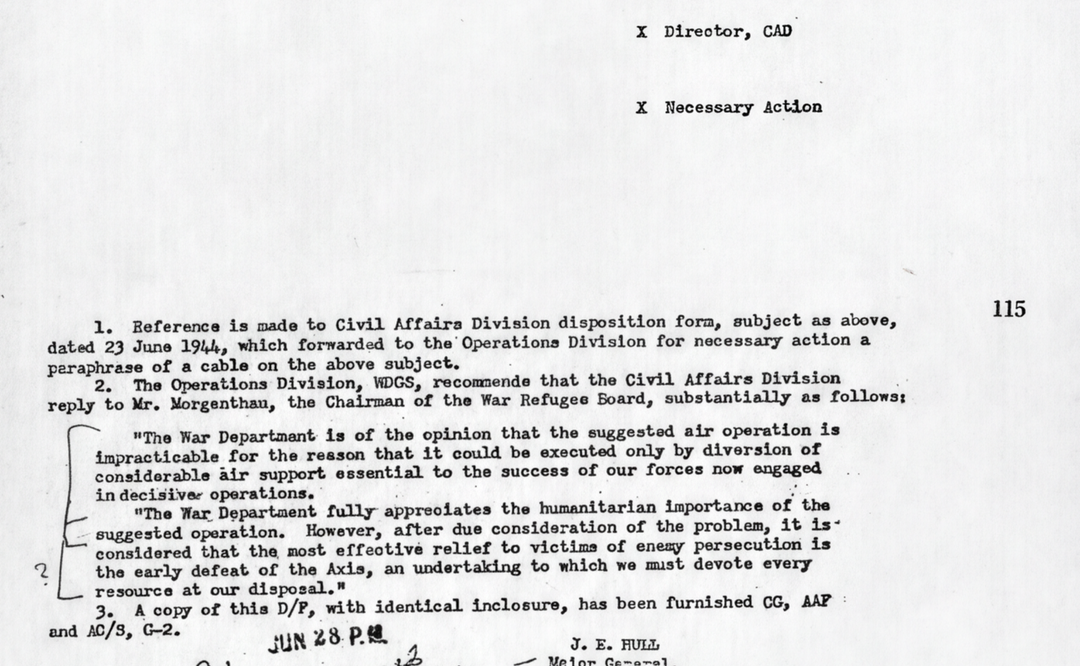
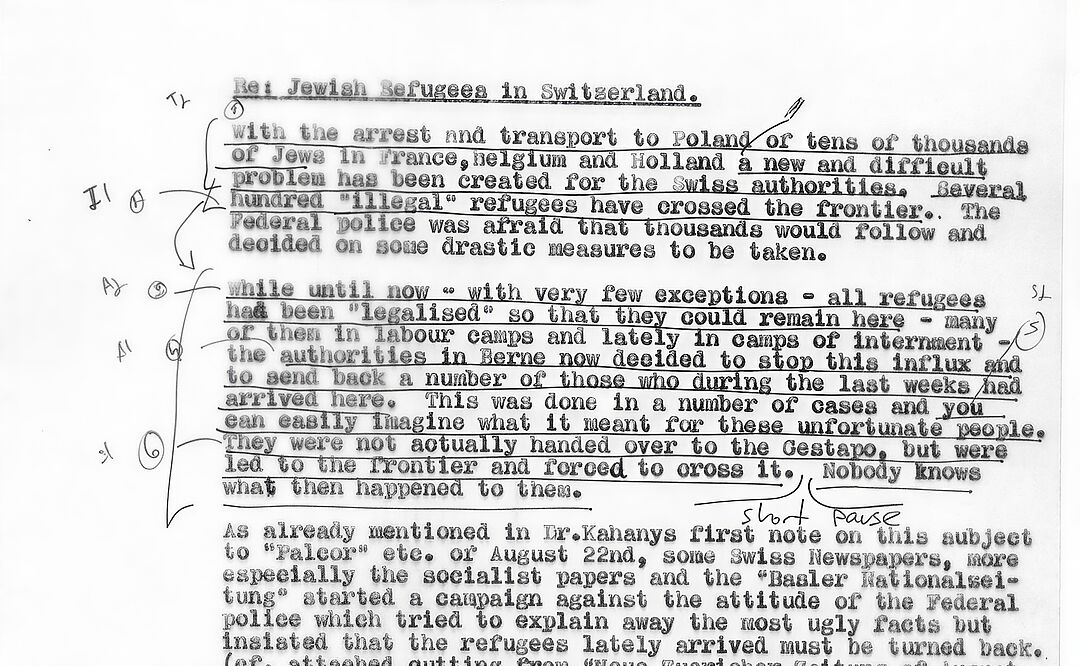
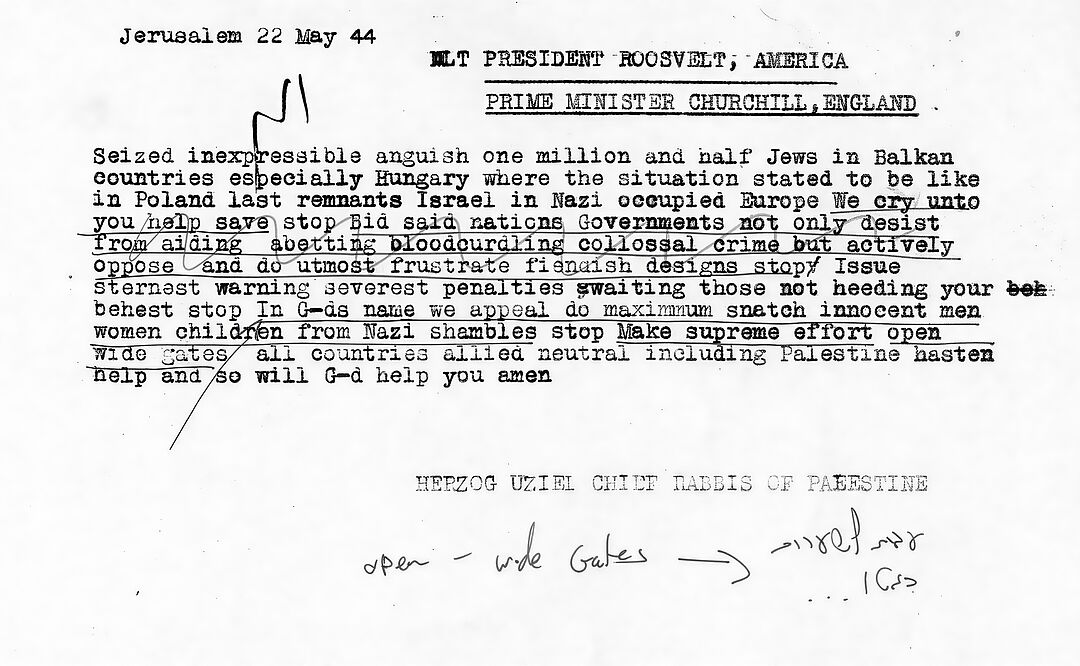
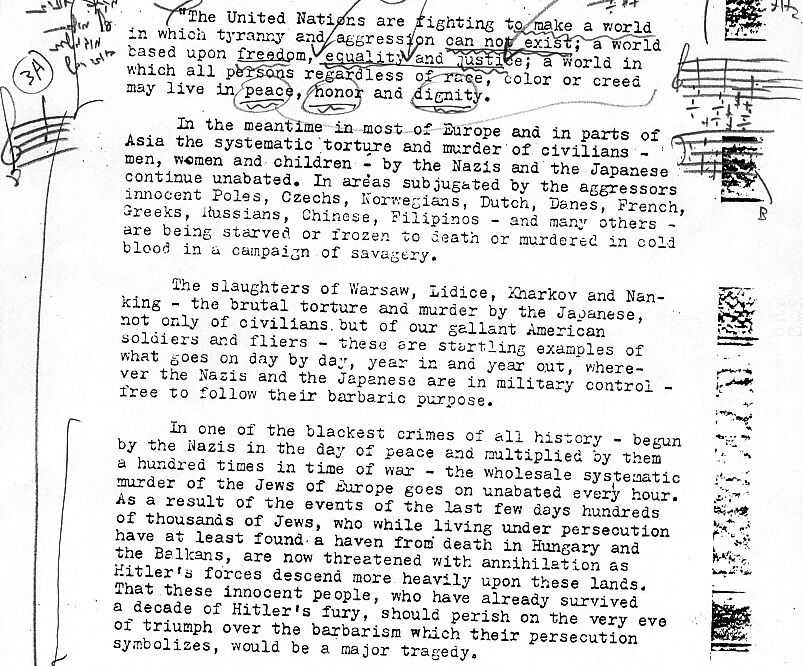
The structure of And the Trains Kept Coming… reflects this thematic complexity. Rapidly shifting scenes juxtapose administrative language with personal testimony, highlighting the chilling contrast between bureaucratic efficiency and human suffering. Navok’s musical language which is tonal yet flexible, serves to amplify this tension, making the work accessible while retaining expressive depth. Like his contemporaries including Steve Reich, his works feature a central motif of trains, a recurring musical and material culture symbol of both Holocaust works and museum design. His composition of an oratorio, rather than another theatrical form, explicitly links the form to the divine, creating a sacred work for remembrance.
Complementing this large-scale composition is the chamber work Found in a Train Station (2006/2007), for soprano and ensemble. This piece is based on a single historical artifact: a note written by a mother forced onto a deportation train, who leaves her child behind in the hope of survival. The composition distills Holocaust experience into a moment of personal crisis, focusing on the psychological and emotional state of the mother. Musically, the voice of the solo mother stands against the collective ensemble, highlighting the voice of a single individual against the larger collective victimization.
Together, these works demonstrate Navok’s dual approach to Holocaust memory: one expansive and socio-political, the other deeply personal. Both rely on documents from the Holocaust, underscoring his commitment to historical evidence even in aestheticization and composition. His music does not attempt to reconstruct the past, but rather to create a space for reflection, remembrance, and ethical inquiry. Navok’s Holocaust compositions also reveal his broader aesthetic philosophy. He has stated that his music seeks to communicate directly with listeners, emphasizing emotional experience over purely intellectual constructs. This orientation is especially evident in his Holocaust works, where accessibility becomes a moral as well as artistic choice while ensuring that the stories embedded in the music remain immediate and impactful.
In this sense, Navok belongs to a generation of composers who view music as a form of historical witnessing. His Holocaust compositions serve not only as memorials but as interventions, urging audiences to confront the implications of past and present indifference. Through these works, Navok contributes to the ongoing evolution of Holocaust remembrance in contemporary classical music, demonstrating how composition can serve as both artistic expression and ethical engagement.
Music responding to the Holocaust occupies a complex position within modern cultural memory, functioning simultaneously as memorial, testimony, and interpretive act. Scholars such as Amy Wlodarski, Shirli Gilbert, and Barbara Milewski have emphasized that such works are not merely artistic reflections but active participants in shaping how the Holocaust is remembered and understood.
A central issue in Holocaust music is the tension between representation and the aestheticization of trauma. For example, Amy Wlodarski argues that postwar composers grapple with the ethical implications of aestheticizing trauma, often turning to documentary materials including texts, testimonies, and archival fragments to ground their works in historical authenticity. This documentary impulse is evident in compositions like Navok’s And the Trains Kept Coming…, which integrates primary sources to construct a narrative of both suffering and complicity. Such strategies reflect what Wlodarski identifies as a “compositional ethics of witness,” in which the composer mediates between history and listener.[1] Barbara Milewski extends this discussion by examining music within broader memorial cultures. She notes that Holocaust compositions frequently are used in commemorative events like concerts, anniversaries, and educational settings where their meaning is shaped by ritual and collective listening.[2] In this sense, the function of the music is inseparable from its performance environment. Works like Navok’s are thus not static texts but dynamic acts of remembrance, continually reinterpreted through performance. Similarly, Shirli Gilbert’s work on music in the Holocaust emphasizes the role of song and performance as tools of resilience and identity preservation. For postwar composers, this legacy often translates into an emphasis on individual voices and micro-histories. Chamber works like Navok’s Found in a Train Station highlight ego documents like a diary in a new way, focusing on a single narrative while hinting at comprehensive representation vis a vis the ensemble. Gilbert’s framework suggests that such intimacy is not a limitation but a necessary mode of engagement, allowing audiences to encounter the Holocaust through personal rather than abstract perspectives. [3]
Across this scholarship, several common themes emerge: the use of documentary materials, the privileging of individual testimony, and the ethical imperative to avoid aesthetic trivialization. Contemporary composers including Navok navigate these concerns through varied strategies, from large-scale oratorios to intimate chamber works. What unites these approaches is an understanding of music as a medium capable of simultaneously engaging emotional and historical consciousness. Navok’s contributions align closely with these scholarly frameworks. His reliance on authentic documents historicizes his compositions, while his focus on both systemic critique (And the Trains Kept Coming…) and individual experience (Found in a Train Station) reflects the dual imperatives identified by Gilbert and Wlodarski. Ultimately, Holocaust-responsive music functions not only as remembrance but as an ongoing dialogue between past and present, and the reincorporation of testimonial evidence in new and aestheticized forms.
More information about the composer including recordings and full program notes for both aforementioned works can be found at: www.liornavok.com
[1] Amy Wlodarski, Musical Witness and Holocaust Representation (Cambridge: Cambridge University Press, 2015).
[2] Barbara Milewski, “Music and Holocaust Memory,” in The Oxford Handbook of Music and World Christianities, ed. Jonathan Dueck and Suzel Ana Reily (Oxford: Oxford University Press, 2016).
[3] Shirli Gilbert, Music in the Holocaust: Confronting Life in the Nazi Ghettos and Camps (Oxford: Oxford University Press, 2005).