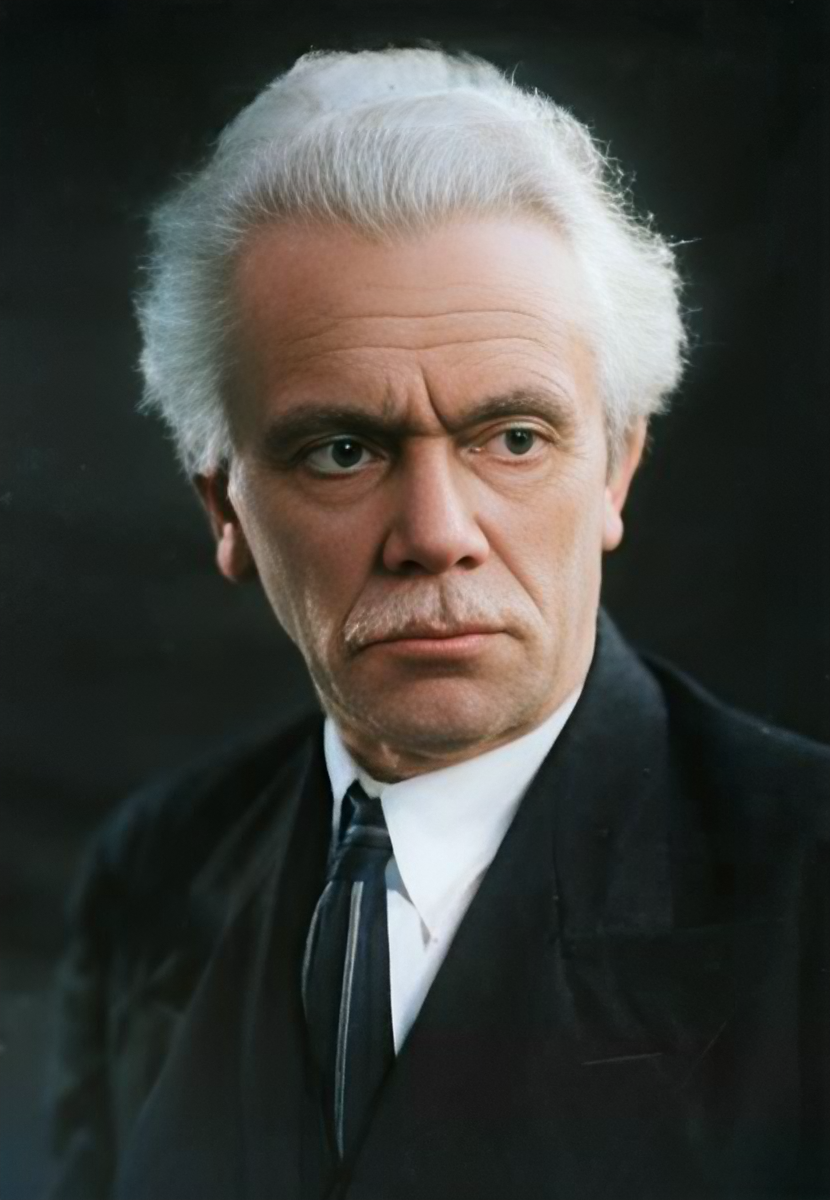


Aleksandr Goldenweiser
Music, Evacuation, and Jewish Identity in Diaries and Ego Documents
On 22 June 1941, the sixty-six-year-old pianist Aleksandr Borisovich Goldenweiser heard Viacheslav Molotov announce on the radio that Nazi Germany had invaded the Soviet Union. Goldenweiser recorded this moment in the diary he had kept for many years, which he continued to write in during evacuation. This provides important and meticulous documentation of the 1,418 days of the Great Patriotic War.
His diary offers a unique insight into music during the Holocaust and the Second World War. Like the State Yiddish Theatre companies and many other intellectuals and composers who were evacuated, his wartime experience was one of flight and evacuation, rather than direct engagement with Nazi camps or ghettoisation. Goldenweiser moved in a series of successive evacuations dictated by the movement of the front. First, in August 1941, he was evacuated by Soviet authorities with a group of prominent cultural figures from Moscow to Nalchik in Kabardino-Balkaria. As wartime conditions changed, the group moved to Tbilisi later that year. When the German offensive reached the Caucasus in 1942, their safety was again threatened, and in September, Goldenweiser travelled east through Samarkand to Tashkent, joining the large community of Soviet artists, musicians, writers and other evacuees already living in Uzbekistan. His evacuation route is intriguing, as it parallels those of other composers, such as Nikolai Myaskovsky, who was also evacuated to Kabardino-Balkaria, and Mieczyslaw Weinberg, who was in Tashkent.
Even before the war, Goldenweiser occupied an extraordinary position in Russian musical culture. Born in Kishinev (present-day Chișinău) in 1875 to a Jewish family on his father's side, he left the city for Moscow with his family when he was eight, two decades before the infamous Kishinev pogrom of 1903. Goldenweiser himself described the distinction plainly: 'My father’s family was Jewish; my mother’s family was Russian noble.' Yet Soviet sources typically identified him as Jewish. His father, Boris Solomonovich Goldenweiser, was a lawyer, and his mother, Varvara Petrovna, encouraged his early musical education. After moving to Moscow, Goldenweiser studied at the Moscow Conservatory under Aleksandr Ziloti and Pavel Pabst, and undertook composition studies with figures including Sergei Taneyev, Anton Arensky and Mikhail Ippolitov-Ivanov. He joined the faculty of the Moscow Conservatory in 1906 and taught there for more than half a century. He served as rector from 1922 to 1924, and led the Conservatory again from 1939 until 1942. His students included some of the most important pianists of the Soviet era, including Samuil Feinberg, Grigory Ginzburg, Rosa Tamarkina, Tatiana Nikolaeva, Dmitri Bashkirov and Lazar Berman. Consequently, his career connected late Imperial Russian musical culture directly to the institutions and pedagogical traditions of the Soviet period.
In August 1941, Goldenweiser was evacuated to Nalchik in the North Caucasus alongside other senior professors, prominent intellectuals and artists due to his affiliation with the Moscow Conservatory. There, he and his talented pupil Samuil Feinberg lived with a group including the actors Vasili Kachalov, Ivan Moskvin, Alla Tarasova and Olga Knipper-Chekhova, as well as the painter Igor Grabar. During the evacuation, they reminisced about the vibrant intellectual and artistic life they had left behind. Other notable figures in Nalchik included the composers Sergei Prokofiev and Nikolai Myaskovsky and the pianist Konstantin Igumnov.
The evacuation did not put an end to his musical work. Goldenweiser continued teaching, performing, composing and participating in cultural life as he moved through the Soviet rear. His wartime diary chronicles these activities alongside military news, conversations, travel difficulties, and the routines of displacement. Remarkably, his personal writings and diary offer a comprehensive musical and personal history of the war that goes beyond published scores and professional activities. For example, he often summarised reports from Sovinformburo (the Soviet Information Bureau), which was set up on 24 June 1941, just two days after the German invasion. Under the leadership of the Soviet government and the Communist Party, it produced official reports on military operations, the home front, partisan activity, and international affairs. Its military communiqués were based on information from the Soviet high command and were published in newspapers and broadcast on the radio across the USSR. The result is a striking juxtaposition in his writing: the enormous violence of the Eastern Front appears alongside lessons, rehearsals, meetings, correspondence, and the daily obligations of a professional musician. This makes Goldenweiser's work invaluable for understanding music during wartime. Cultural evacuation did not simply remove musicians from danger. It also relocated the networks of Soviet musical life to the interior of the USSR. Musicians carried teaching practices, repertoire, institutional relationships, and professional hierarchies with them. When they left Moscow, Goldenweiser and his colleagues did not stop performing as musicians. Instead, wherever circumstances permitted, they reconstructed portions of their professional world. Goldenweiser’s writings also provide insight into the daily lives of other composers, including Myaskovsky, Prokofiev and Weinberg, during their time in evacuation. His writings corroborate other key sources, such as payroll records, funding bodies, and official appeals to Soviet authorities, helping to reconstruct the fragmented biographies and evacuation histories of these composers.
Nalchik itself soon became unsafe. As the German military advanced towards the Caucasus, the Soviet authorities evacuated cultural figures further away from the front line. Goldenweiser travelled on through Georgia and eventually reached Tashkent. Uzbekistan had become one of the most important destinations for Soviet evacuees, including large numbers of writers, composers, actors, scholars and other cultural workers, as well as the Moscow State Jewish Theatre. Consequently, Goldenweiser’s journey belonged to a much larger wartime relocation of Soviet cultural life towards Central Asia, and to the rebirth of Yiddish culture among the Jews there. Consequently, Goldenweiser’s experience also exposes a darker contradiction within Soviet wartime culture. While Nazi Germany was waging a war of racial annihilation against Soviet Jews, anti-Semitic thinking was increasingly appearing within parts of the Soviet state apparatus, resulting in significant anti-Semitic and anti-cosmopolitan legislation in the immediate post-war period. Goldenweiser became a conspicuous target precisely because of his prominence in Soviet musical life and his networks during the evacuation.
In August 1942, Georgii Aleksandrov (head of the Central Committee’s Agitation and Propaganda Administration) and Tatiana Zueva prepared a memorandum on the personnel of Soviet cultural institutions. The memorandum's discussion of the Moscow Conservatory employed unmistakably ethnic language. The memorandum complained that the training and advancement of musical personnel in higher education was largely in the hands of 'non-Russians'. It then identified the Conservatory’s leadership: 'Director Goldenweiser is a Jew; his deputy, Stoliarov, is a Jew.'
It continued by listing Jewish musicians in leading positions at the Conservatory, and complained about Jewish representation elsewhere in Soviet cultural institutions. It linked this alleged dominance of Jews to a lack of attention to Russian music and folk songs. The choice of language was significant. Goldenweiser had devoted his life to Russian musical culture. He had studied with some of its most celebrated figures, taught generations of Soviet pianists, and repeatedly emphasised the importance of a broad musical education. However, none of this prevented state officials from categorising him first according to his ancestry. On 19 November 1942, the Committee on Arts decided to replace Goldenweiser as director of the Moscow Conservatory, officially citing his advanced age. He remained one of the institution’s most important professors, however, and continued to head its piano department for years afterwards. While his denunciation and removal were more clearly racially motivated than the puzzling case of Myaskovsky in 1948, the chronology nevertheless places his dismissal within an emerging wartime campaign to reduce Jewish influence in cultural institutions.
Consequently, Goldenweiser’s case complicates any simple account of Soviet Jewish musicians during the Second World War. He was deeply rooted in Russian musical culture and described his own family as both Jewish and Russian. The Soviet cultural establishment celebrated him as one of its most distinguished musicians. However, an internal state document could reduce decades of service to a single Jewish designation. Nevertheless, music remained the organising principle of Goldenweiser’s wartime life. His diary chronicles a world in which musicians continued to teach, practise, perform, compose and discuss art during evacuation and after the war.
Goldenweiser returned to Moscow in March 1943, immediately after the turning point at Stalingrad in January and February. He continued to teach at the Conservatory until his death in 1961, during which time he received some of the Soviet Union’s highest cultural honours. These included the title of 'People’s Artist of the USSR' in 1946, and, incredibly, a Stalin Prize in 1947. His students carried his pedagogical influence well beyond his lifetime. His wartime diaries, published in an extensive edition in 2025, reveal another side to Goldenweiser. Here, the eminent professor is portrayed as an evacuee who follows military reports, moves from city to city and encounters other displaced cultural figures. He also attempts to preserve musical work in extraordinary circumstances.
In terms of the history of music and the Holocaust, Goldenweiser’s life and writing provide important context regarding evacuation to the Soviet interior and the anti-Semitic aftermath of WWII. His writings provide vivid daily snapshots of the professional experiences of musicians in the Soviet rear and list important institutions, offering insights into who was sponsoring, motivating and supporting evacuees. His celebrated post-war career also provides a counterpoint to the experiences of composers such as Weinberg and targeted performers such as Solomon Mikhoels, as well as Soviet composers such as Myaskovsky and Prokofiev, who all had fraught relationships with the Soviet state.
Alexandra Birch, October 2026
Sources
- Russian National Museum of Music, “Vospominaniia o godakh Velikoi Otechestvennoi voiny v dnevnikakh Aleksandra Borisovicha Goldenveizera,” accessed September 29, 2026. The museum reproduces Goldenweiser’s June 22, 1941 diary entry and discusses his evacuation, teaching, concerts, and travels in Nalchik, Tbilisi, and Tashkent.
- Aleksandr B. Goldenweiser, “Vospominaniia o godakh ucheby v Moskovskoi konservatorii,” ed. Feliks Gotlib, Sem’ iskusstv, no. 12 (2024). Goldenweiser describes his paternal family as Jewish and his maternal family as Russian nobility.
- Moscow State P. I. Tchaikovsky Conservatory, “Goldenveizer Aleksandr Borisovich,” accessed September 29, 2026.
- Aleksandr B. Goldenweiser, Dnevnik voennykh let (1941–1945), ed. L. L. Tumarinson (Moscow and St. Petersburg: Nestor-Istoriia, 2025). The diary begins on p. 13; the 1942 entries begin on p. 75, 1943 on p. 185, 1944 on p. 289, and 1945 on p. 396. The volume also includes a chronology of Goldenweiser’s wartime life and work, pp. 523–34, and his wartime performance repertoire, pp. 535–37. NestorBook
- G. F. Aleksandrov and T. M. Zueva, “O kadrovoi politike v oblasti iskusstva,” memorandum from the Administration of Propaganda and Agitation of the Central Committee of the VKP(b) to the Secretariat of the Central Committee, 1942, Alexander N. Yakovlev Foundation.