




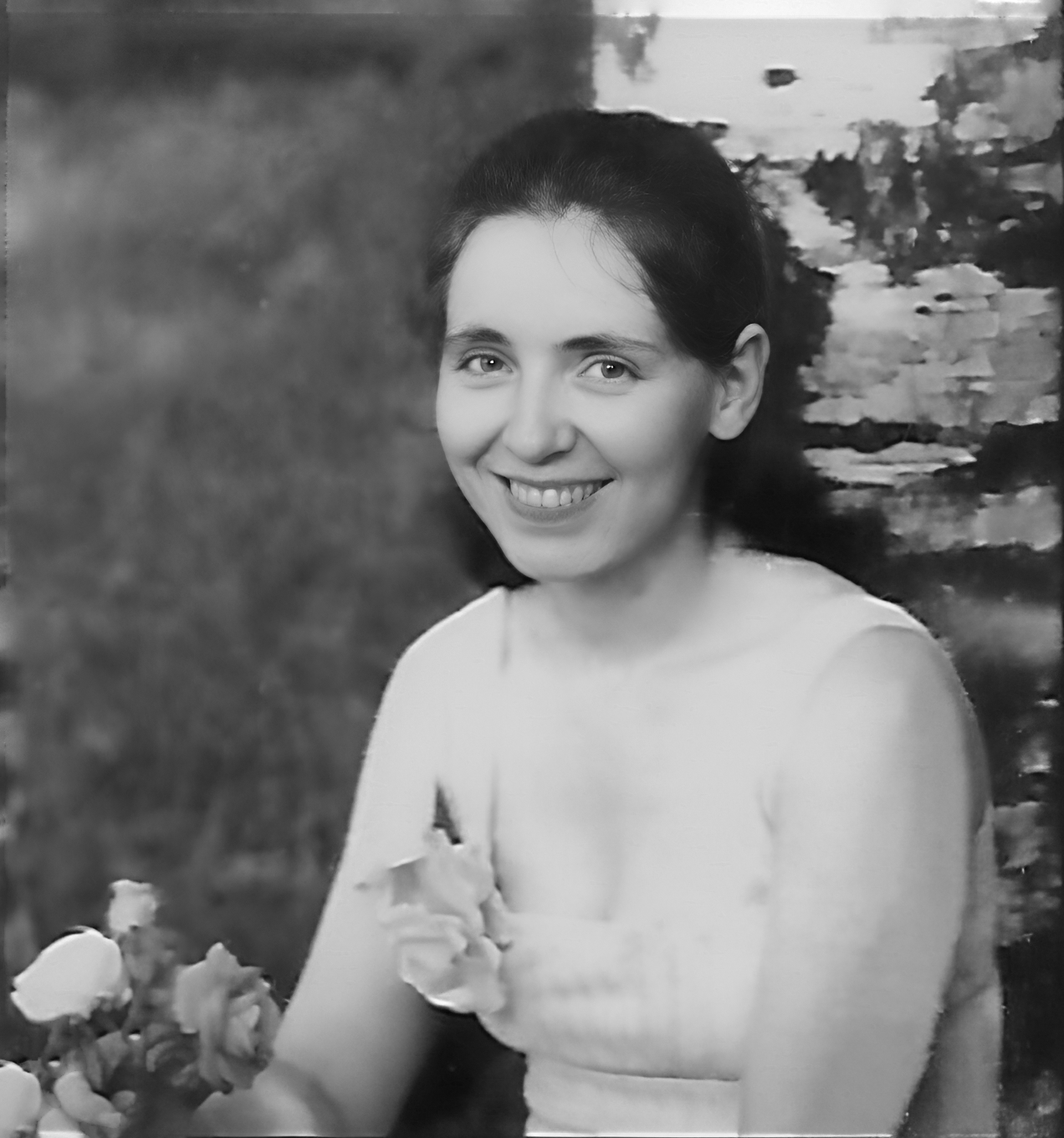
Zlata Razdolina
From Soviet Persecution to Holocaust Commemoration
Russian Jewish composer Zlata Razdolina's life changed dramatically in 1989 after the premiere of her musical setting of Anna Akhmatova's "Requiem" at the Kremlin. Despite the work's international acclaim, its success made her a target of the Russian far-right antisemitic, and monarchist organization, Pamyat, leading to threats and attacks that forced her to flee to Israel in 1990.
Born in Leningrad in 1959, Razdolina showed exceptional musical talent from an early age, beginning piano at four and composing by five. By seventeen, her compositions were broadcast on Soviet radio, and she gained membership in the Leningrad Union of Artists. Her career flourished through the 1980s with performances at Lenconcert, culminating in her landmark composition of Akhmatova's "Requiem" in 1988.
The "Requiem," written for symphony orchestra, choir, and soloists, won multiple competitions and received performances across Finland, Sweden, the Czech Republic, and the United States. However, this success attracted unwanted attention from anti-Semitic groups, making her position in Russia untenable.
Holocaust Commemoration Through Music
After relocating to Israel, Razdolina continued her focus on musical interpretations of significant historical and cultural works. In 1997, she completed one of her most important compositions: the Holocaust Requiem, a musical setting of "The Song of the Murdered Jewish People" by Itzhak Katzenelson. This powerful work chronicles the extermination of Jewish life in Warsaw and is considered Katzenelson's most significant work during the Holocaust period.
The Poem's Origins and Significance
Katzenelson, one of the most prolific writers of his generation, wrote the poem during his detention at a transportation camp in Vittel, France, shortly before his deportation to Auschwitz. Though he wrote in both Hebrew and Yiddish before the war, he chose Yiddish for this piece—titled "Dos Lid fun Oysgehargetn Yidishen Folk"—seeking direct communication with the Jewish masses whose mother tongue was Yiddish.
The poem was buried in Vittel's soil, where it remained until the end of the war. After its discovery, it was transported to the Ghetto Fighters' Kibbutz Museum, which bears Katzenelson's name. First published in 1945, approximately a year after the author perished in the gas chambers of Auschwitz, the work has since appeared in numerous editions in Hebrew and Yiddish and has been translated into many languages, including English, German, and Russian.
As a witness to the events he described, Katzenelson viewed the fate of Warsaw's Jews as representative of all Jewish people caught in Nazi oppression. His epic work combines poetic chronicle with profound love for his fellow Jews and intense revulsion toward their murderers.
The Musical Composition
Razdolina's Holocaust Requiem, which runs nearly an hour, features scores for large orchestra, choir, and cantor. The symphonic version was recorded by the Moravska Filharmonia-Olomouc in the Czech Republic, conducted by Maestro Victor Feldbrill from Toronto, Canada.
The work received its New York premiere at the Cathedral of St. John the Divine in 2002, performed by the Brooklyn Philharmonic Orchestra under conductor Arkady Leytush. Hollywood actor Fritz Weaver, known for his role in the television series "Holocaust," served as narrator while Razdolina herself sang in Hebrew and played the synthesizer.
In 2012, Razdolina expanded her Holocaust-themed compositions with "Korczak," featuring lyrics by Jiro Kondo. This piece commemorates Janusz Korczak, the renowned teacher and author who refused to abandon the children from his orphanage when they were deported to Treblinka, choosing instead to accompany them to their fate.
English Translation: Esther Cameron
Fly, sparrows,
twitter the song of Krochmalna
Crying birds
that fell from the nest,
I will rock your cradle
A star fell,
fading into
the Warsaw night
The cold echo
of black boots
sounds
in the ghetto night
Alone with God
in the tonguing fire
of the seven flames
Cry, wind,
for the dead children
of Treblinka
Soft breeze, blow
over the summer heath of Treblinka
a requiem
Musical Legacy
Razdolina's repertoire extends beyond her Holocaust-themed works to include over six hundred romances and songs based on Russian classical poets, including Akhmatova, Nikolay Gumilyov, Marina Tsvetayeva, and Igor Severyanin. In Israel, she expanded her work to include compositions based on Israeli poets such as Rachel, Y. Volakh, and L. Goldberg.
Her contributions to Israeli culture include the soundtrack for the television series "Kastner's Trial," which won the Israeli Oscar for best dramatic series in 1994. She has composed for numerous theaters in both St. Petersburg and Israel, creating works for symphony orchestras, choirs, and chamber ensembles.
Razdolina maintains active membership in several prestigious organizations, including the Israeli Composers Organization, The Israeli Union of Performing Artists, The International Federation of Actors, and the International Alliance for Women in Music. Her work continues to be performed internationally, with successful concert tours in the United States, Canada, and returns to Russia, where she has performed at venues including the Anna Akhmatova Museum and the St. Petersburg International Club.
1959: Born in Leningrad
1963: Begins piano studies
1964: Composes first piece
1976: Accepted to Leningrad Union of Artists
1988: Composes musical setting of Akhmatova's "Requiem"
1989: "Requiem" performs at Kremlin for Akhmatova centennial
1990: Emigrates to Israel
1994: Wins Israeli Oscar for "Kastner's Trial" soundtrack
1997: Completes "The Song of the Murdered Jewish People" (Holocaust Requiem)
2002: New York premiere at Cathedral of St. John the Divine
2003: Returns to Russia for performances
2006: Concert tour in USA and Canada
2008: Releases multiple CDs of her work
2012: Composes and performs "Korczak"
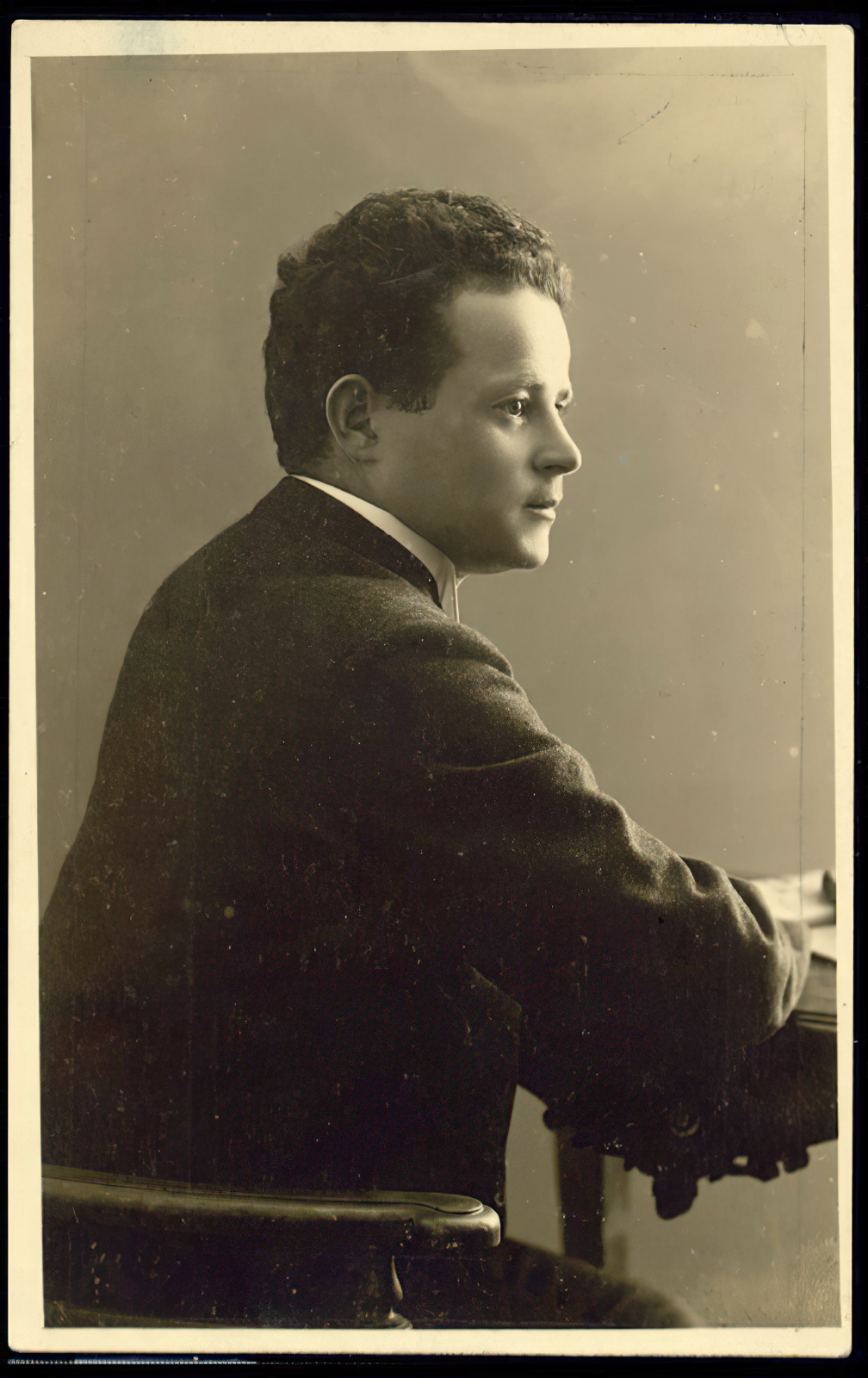
Itzhak Katzenelson, 1908. The Schwadron Collection of the National Library of Israel