




Helena Wertheim
Helena Wertheim, an opera singer born in Warsaw in 1879, performed on stages in Poland and abroad between the wars. She was among the first musicians to be heard on Polish radio. In August 1925, she participated in a Tchaikovsky evening broadcast by one of Warsaw's pioneering radio companies, which appears to have been her first time performing in front of a microphone. Fifteen years later, she was confined to the Warsaw ghetto, where she is listed among the stage artists. She worked in one of the German-run workshops on Gęsia Street during this time. She was killed there in January 1943 during a German operation, when she was shot alongside a group of women who had hidden under a pile of feathers in a storeroom. The Yiddish actor and director Jonas Turkow, who knew her in the ghetto, described her death and called her 'the well-known opera singer'.
Born on 25 June 1879 in Warsaw, she is described as a soprano who appeared on opera stages in Poland and abroad during the interwar period. She was connected by marriage to a family well known in Polish-Jewish art. Turkow identifies her twice as the sister-in-law of the painter Wicek Brauner (Wincenty or Icchok Brauner, 1887–1944), a member of the Łódź avant-garde group Yung-Yidish. He was confined in the Łódź ghetto and deported to Auschwitz in August 1944. Turkew also refers to her as Wertheim-Brauner and Brauner-Wertheim, suggesting that she used her married name alongside her birth name.
In the summer of 1925, Polish broadcasting was only months old. The commercial radio company Polskie Towarzystwo Radiotechniczne had begun experimental transmissions in Warsaw in February of that year, over a year before the state broadcaster Polskie Radio launched its regular service. Programmes were short and varied, based around whatever performers could be brought to the studio, and an evening devoted to a single composer was a familiar format. On Saturday 1 August 1925, between 8pm and 10pm, on a wavelength of 385 metres, the company broadcast a Tchaikovsky evening featuring instrumental pieces, arias and songs. The programme brought together the well-known Lidia Kmitowa Trio and tenor Mieczysław Salecki, as well as Helena Wertheim, who was probably making her radio debut. The programme was announced in the radio weekly Radjofon Polski on 31 July 1925.
Warsaw's Jews were sealed into the ghetto in November 1940. Inside it, musical life was extensive and, for a period, licensed: there were five theatres, cafés with cabaret programmes, a symphony orchestra, and musicians performing in the streets. Jonas Turkow, an actor and director before the war, was among the organisers of these activities and later one of their chroniclers. In the roster of ghetto stage and variety artists that he compiled for his memoirs, Helena Wertheim appears alongside some fifty other names, including Wiera Gran, Marysia Ajzensztadt, and the soprano Czesława Perenson. It is through this list that she is recorded in the Warsaw Ghetto Internet Database as a creative artist who was in the ghetto.
Turkow's narrative provides a more precise account. Following the mass deportations of summer 1942, during which the remaining population was concentrated around the German workshops, he recounts how his Polish friend Gerard Gadejski obtained a month's pass to enter the ghetto and visit his friends: Julian Neumark's family, Helene Wertheim (the sister-in-law of the painter Wicek Brauner), and himself. Among the workers in Nossen's metal workshops on Gęsia Street, Turkow names David Wdowiński, a physician and communal activist; Dr Bakman; Zygmunt Alter; his brother-in-law Pinkus Blumenfeld; and "the singer Wertheim-Brauner". He makes a practical observation about the location, noting that because the workshop was close to the Jewish cemetery on Okopowa Street, contact with the Polish side of the wall could be maintained from there. By winter 1942, working in a German workshop was the main form of protection available in the ghetto. Wertheim's presence there suggests that she had been given a labour card instead of being deported to Treblinka in the summer.
Between 18 and 21 January 1943, the Germans attempted a further round of deportations. Around five thousand people were sent to Treblinka, and some 1,170 were killed inside the ghetto. This was the first organised armed resistance the Germans encountered in Warsaw, and they broke off after four days. This is why it is chiefly remembered as a prelude to the uprising three months later. The fighting also reached the workshops, where Wertheim died. Turkow learned of her death when he obtained a permit and walked through the deserted streets of Karmelicka and Nowolipki to visit his brother-in-law at Nossen's shop:
"I learned of the destruction the Germans wrought there during the January 'action'; many were murdered, among them the well-known opera singer Helena Wertheim — the sister-in-law of the artist-painter Wicek Brauner. When during the 'action' the turn came to Nossen's shop, several women, Wertheim among them, decided to hide in a store-room among a heap of feathers. The Germans went in and fired machine guns into the pile of feathers, under which the hidden women lay. They all perished, and stained the feathers with their blood."
Turkow adds that, after the action, the hearse belonging to Mordechai Pinkert, the ghetto's undertaker, collected the bodies and took them to the cemetery on Gęsia Street.
Reference works that mention Helena Wertheim state that she died around 1942. However, Turkow, who was in the ghetto at the time and published his account in Buenos Aires in 1948, dates her death to the January 1943 action, and this is considered more accurate.
Music and the Holocaust, 2026
Sources
'Helena Wertheim'. Internetowy Słownik Biograficzny Artystów Scen Polskich. janek.czarnieckiego.pl/artysta/helena-wertheim/
Muzeum Sztuki w Łodzi. 'Brauner, Wincenty (Icchak)'. zasoby.msl.org.pl/martists/view/612
Muzeum Miasta Łodzi. 'Jung Idysz'. Panteon Wielkich Łodzian. panteon.muzeum-lodz.pl/jung-idysz/
'Piosenkarze i artyści sceny w getcie'. Internetowa baza danych i mapa getta warszawskiego. getto.pl/pl/Wydarzenia/Piosenkarze-i-artysci-sceny-w-getcie
Posen Library of Jewish Culture and Civilization. 'Vincent Brauner (Yitskhok Broyner)'. www.posenlibrary.com/author/vincent-brauner-yitskhok-broyner
RadioPolska. 'Wydarzyło się 1.08.1925'. 100 lat polskiej radiofonii. radiopolska.pl/100lat/wydarzylo_sie_19250801 (citing Radjofon Polski, 31 July 1925).
Turkow, Jonas. Azoy iz es geven: hurbn Varshe. Buenos Aires: Tsentral-farband fun Poylishe Yidn in Argentine, 1948, pp. 232, 242–243, 330, 476. archive.org/details/nybc200782
Turkow, Jonas. C'était ainsi: 1939–1943, la vie dans le ghetto de Varsovie. Paris, 1995, p. 201.
'Wertheim Helena'. Internetowa baza danych i mapa getta warszawskiego. getto.pl/en/People/W/Wertheim-Helena-Unknown
Żydowski Instytut Historyczny. '1943: styczniowa akcja likwidacyjna w getcie warszawskim'. www.jhi.pl/artykuly/1943-styczniowa-akcja-likwidacyjna-w-getcie-warszawskim,424
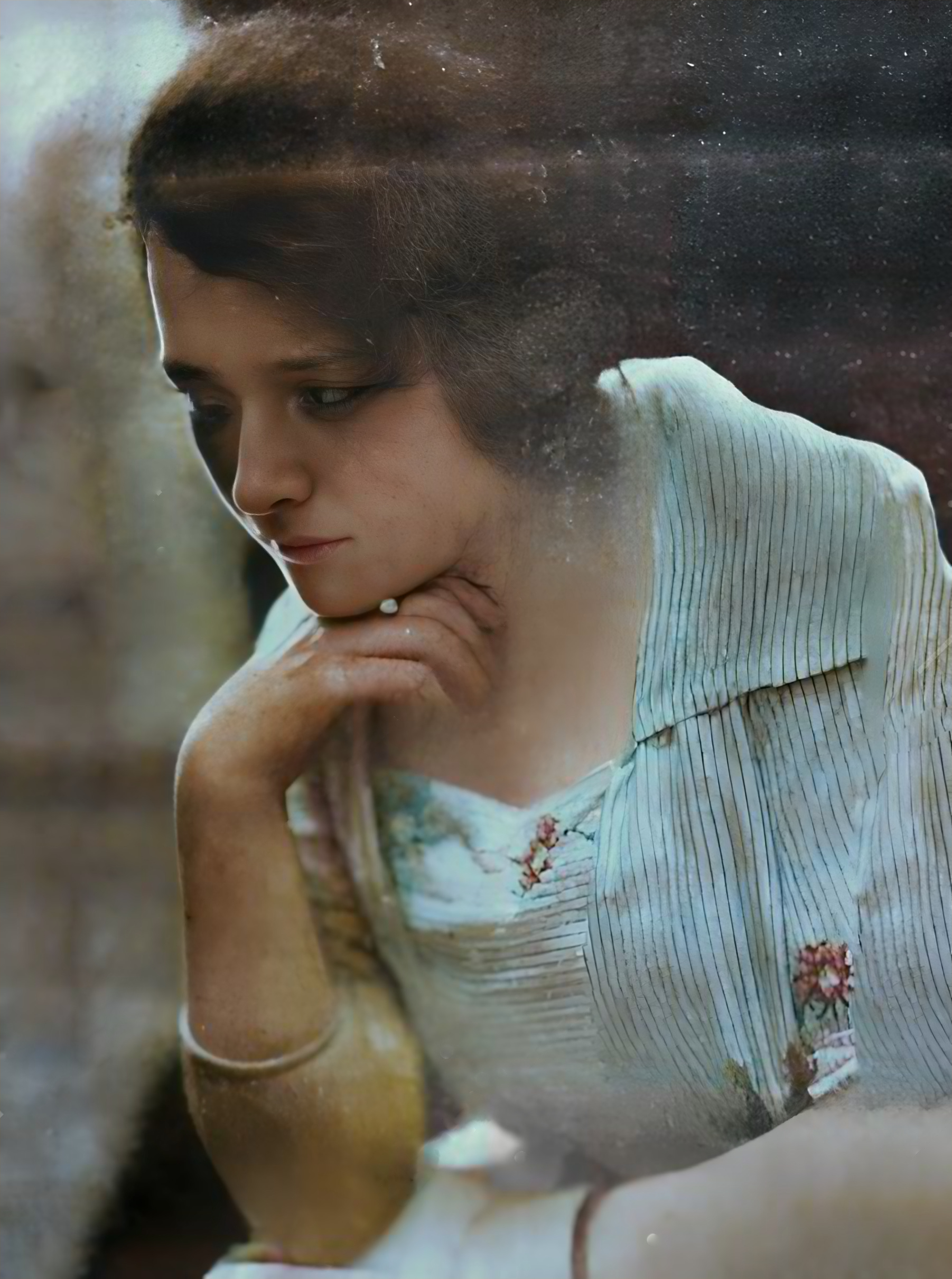
A portrait of Helena Wertheim. News Illustrated No. 36. 1925